

Paperback
$21.99
ISBN 979-8-9924591-5-9
#1 New Release in Public Relations on Amazon.
By Isaac Mashman, with a foreword by Eric Chow (opens in a new tab). The world's first Philosophy of Personal Branding.
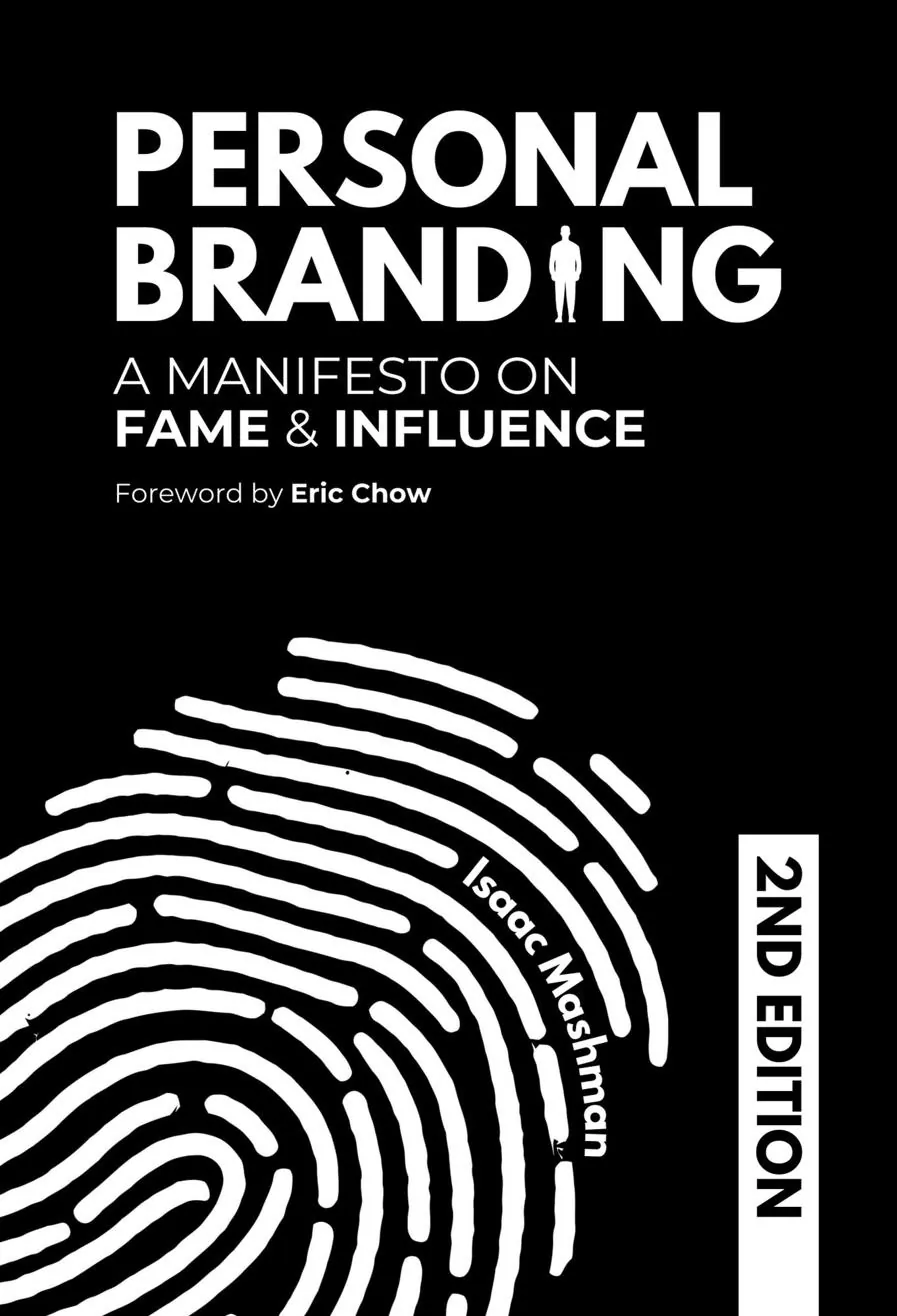
At its peak, the Manifesto ranked in Amazon's Top 10 Best Sellers in Public Relations, the same chart led by Edward Bernays' Propaganda, the founding text of the discipline.
No philosophy, codified body, or standard of practice exists for personal branding. The Second Edition fills that institutional gap, establishing the core tenets of belief, laws, and standards of practice as the world's first Philosophy of Personal Branding.
A 376-page expansion of the 2021 original: in the author's own words, “a continuation and remarkably more mature look,” and “a far more thorough deep-dive” rather than a light revision. It presents philosophical and psychological approaches built to resist obsolescence.
Each subchapter closes with a prompt marked Q (Question), T (Task), or A (Apply), so the book is worked through, not only read (how to read it). The dedication reads: “Dedicated to YOU, the singular person that this Manifesto talks about.”
Eight numbered chapters and 78 subchapters, with the essay Identity Positioning: A Macroscopic View on Personal Branding inserted between the seventh and eighth chapters. The essay was academically published on its own in 2024: read it on Figshare (opens in a new tab).
Every chapter and all 78 subchapters, with the page each begins on. Open a subchapter for the prompt that closes it, word for word, and the free tool on identitypositioning.com built from it. Each bar is a chapter's length in subchapters.
The foundation and understanding needed to fully comprehend the chapters to come.
“Personal branding, by my estimation, is the world's oldest form of branding.”
1.3 The Oldest Form of Branding
QuestionHow has your perspective on personal branding shifted since reading this subchapter? What has been clarified, compared to your prior understanding on the subject?
QuestionWhat are some historical examples of people who used their personal brands to achieve a particular goal? What did they do?
QuestionWhat are your thoughts on personal branding being the oldest form of branding? Do you agree?
QuestionWhat is a New World Example of personal branding you’d include?
QuestionDo you want to be famous? Explain your reasoning. If you do, why is that? If you don’t, why not?
QuestionWho are some of the people who have influence over you? These may be celebrities, mentors, or parents. How did they obtain this influence?
QuestionWhat are examples from your own life of people who fall under the Hierarchy of Personal Branding? What level do you want to reach yourself?
A proclamation of depth, progression, and scale.
“A personal brand is the unique fingerprint of every human who has ever lived.”
2.4 The Law of Personal Branding
QuestionHow have you seen the Law of Familiarity in your own life?
QuestionWho is somebody that started as a stranger to you, but is now a close friend or mentor? What led to this relationship’s growth?
QuestionWho is a famous person who holds equal influence? What makes them influential as opposed to just being famous?
TaskDo some research into your lineage and find a distant grandparent more than 3 generations back. Learn about their life if possible.
Put it to work: Name Generator (opens in a new tab), free on identitypositioning.com.
The intrapersonal ways of thinking and living required to develop a successful personal brand.
“It is not a necessity to have talent. It is a necessity to have willpower.”
3.6 Burnout and Competition
QuestionWhy would someone choose to follow another person? Think about what makes them appealing.
TaskWhat are you going to do to develop your aggressive patience and proper intensity?
QuestionHow did the aforementioned figures build longevity with their personal brands? Why did their names not just die out?
QuestionHow has your confidence grown from when you first started in your business or profession?
QuestionWhat is an example when you let your attitude falter? How did it affect your results?
QuestionHave you ever experienced burnout? How did you get out of it?
QuestionThink about someone in culture who accumulated a lot of fame and either lost it, or went down a dark path. How did it happen and what could they have done to prevent it?
TaskSpend the next few minutes researching some of the most influential people throughout history. What shared experiences or traits did they possess?
How to develop the public expression of your internal ambitions.
“Branding is what people know you as, whereas marketing is how you get more people to know about you.”
4.1 Who Are You?
QuestionWhat are standout interests or traits about you that can be used as a personal hook?
TaskWrite your elevator pitch. It should have a personal hook and a professional punchline. Make it personable, but not salesy. After you are done, read it aloud several times. Polish as needed.
Put it to work: Elevator Pitch Builder (opens in a new tab), free on identitypositioning.com.
QuestionHow have you built rapport with your friends in the past? What about your friendships make them work, in comparison to the colleague or family member you find yourself at odds with?
QuestionWhat is something unique to you that others may find interesting or quirky? What fun facts about you potentially make you stand apart?
Put it to work: Cliché Checker (opens in a new tab), free on identitypositioning.com.
TaskTake the time to research your name. If you are competing with others, redirect your searches to include your middle name. Decide today whom YOU want to be known as.
Put it to work: Seamless Branding Report Card (opens in a new tab), free on identitypositioning.com.
ApplyBefore you make an announcement, begin to hint at it during media appearances, in your content, and in messaging. Build up some suspense leading to the launch.
Put it to work: Skyline Planner (opens in a new tab), free on identitypositioning.com.
ApplyMimic a successful campaign or strategy of another public figure, either in business, social media, or otherwise. Put your unique spin on it and evaluate the response. For example, take a piece of viral content and rephrase it to apply to your personal brand.
Put it to work: Mentor Blueprint (opens in a new tab), free on identitypositioning.com.
QuestionCan you think of someone who came across as a gimmick? Did it make you feel more or less confident in their abilities?
TaskTake this time to examine your personal brand as it is today. Is your material up to date? What from your past messaging no longer applies? Make changes where needed.
Put it to work: Mentor Blueprint (opens in a new tab), free on identitypositioning.com.
QuestionWhat are you delivering through your personal brand? For example, if you’re educating others, what are some of the exact takeaways through your materials?
TaskResearch the associations and meaning behind your favorite colors. Pick two colors to begin using for your personal brand. If they are too contrasting and don’t work well together, choose another.
Put it to work: Brand Color Builder (opens in a new tab), free on identitypositioning.com.
ApplyGet comfortable with your voice. Experiment with it and take ownership of how you sound. Understand your tonalities, how you can inflect emotions, command attention, etc. Recording yourself speaking or listening to past media is encouraged. Eliminate filler words and points of contest when you can.
Put it to work: Audio Branding Planner (opens in a new tab), free on identitypositioning.com.
QuestionWhat is YOUR story? If you were put on the spot right now, where would you start? What aspects are important and worth mentioning?
Put it to work: Story Builder (opens in a new tab), free on identitypositioning.com.
QuestionWhat situations would you use 1st, 2nd, and 3rd person points of view for your personal brand?
Put it to work: Bio in Three Voices (opens in a new tab), free on identitypositioning.com.
TaskPerform another audit of your personal brand. At first glance, does it appear seamless? Try your best to be impartial and put yourself in the shoes of a complete stranger. What do you see that is working and what could be better?
Put it to work: Bio in Three Voices (opens in a new tab)Seamless Branding Report Card (opens in a new tab), free on identitypositioning.com.
It is as much about keeping and maintaining your reputation, as it is building it.
“Thinking that you can buy your way into a positive reputation is a fool’s way of thinking.”
5.3 It Can’t Be Bought
QuestionIf presented with a controversy, what path do you think you’d be the most prone to choose? Why?
QuestionWho from your past has leverage over you? Are you prepared to deal with the fall out should it be levied against you?
QuestionHave you ever followed someone and later realized they were engaged in dishonest or pay-to-win practices? How did that affect your perception of them and their credibility? How did you find out?
ApplyStart to get on the radar of journalists and media professionals who contribute to the outlets you want to be featured in. Narrow your search down by following those who write specifically about your profession. Get into their ecosystem, sign up for their email list, etc; and begin looking for source requests.
ApplyEvaluate the red tape you have for your personal brand and add more as needed.
QuestionWhat is an example of someone in your profession who has utilized controversy to drive awareness for their personal brand? What takeaways can you deduce?
Put it to work: Mentor Blueprint (opens in a new tab), free on identitypositioning.com.
QuestionIs there anything that you are currently doing or have recently done that, if surfaced, could harm your credibility and damage the public’s perception of your personal brand? This is a good time to stop said action/s. Imagine if it did come to light; how would it make you feel, how would those closest to you be impacted, and how could you mitigate damage done?
TaskResearch various defamation cases between individuals. What circumstances led to the cases being filed and what statements were made?
QuestionHave you ever dealt with a public crisis? What led to the situation’s escalation and what resolution did you reach?
TaskWrite out a personal Code of Conduct. What do you stand for and what morals and ethics will you adhere to in building your personal brand?
TaskResearch recent celebrity endorsement campaigns. Did the celebrity actually use the product or service or was it simply a payday?
ApplyOnce a month or as you see fit, make a post expressing gratitude for everyone who supports you. This takes 30 seconds to do but will have an immeasurable impact on your personal brand.
QuestionIs your word always good? If you answered no, take a look at situations where you’ve broken your word. When was the last time you talked to that person? This may be a good time to reach out and apologize.
TaskList as many wins from your last 12 months as possible; these should be both about personal and professional successes. At the end of this exercise reflect on how you feel and determine the wins you’d like to drive more awareness to.
Steps to reach more people and expand your personal brand’s awareness.
“In the age of microwave meals, positioning yourself as a long-term thinker that prefers Crock-Pot meals is a strong competitive advantage.”
6.6 Communicating Intent
TaskList off as many marketing methods as possible. Which one/s appeal to you and which ones do you think will be the most beneficial to your personal brand?
TaskTake an aerial view of your personal brand. Is it all over the place or organized? What can you optimize for length and impact?
Put it to work: Elevator Pitch Builder (opens in a new tab), free on identitypositioning.com.
TaskRewrite your marketing phrase until you find a combination that has both a personal hook and professional punchline that communicates your intended message.
Put it to work: Elevator Pitch Builder (opens in a new tab), free on identitypositioning.com.
QuestionIf your main marketing channels disappeared in some act of God or bankruptcy, would you have a contact list to fall back on? Is it suitable as it stands to continue generating results?
Put it to work: Power of 3 Tracker (opens in a new tab), free on identitypositioning.com.
ApplyUse the Power of 3 on a daily basis and make it a part of your personal branding habits [ 8.7 ]. Track your results weekly, monthly, quarterly, and yearly.
Put it to work: Power of 3 Tracker (opens in a new tab), free on identitypositioning.com.
TaskUse this time to meditate on your true intent behind building your personal brand. Think about what you are looking to gain from others as well as what you’re offering in exchange.
TaskUsing a T-chart, list out and categorize the various incentives you are offering or could offer through your personal brand under both free and paid sections.
QuestionWhat is your favorite movie or song? Is it your favorite because of the quality of the work or because of the way the work makes you feel?
QuestionWhat good deed have you recently done? How did it make you feel? Now imagine if you took to promotion and told others about it. How do you think the emotions would evolve with publicity?
ApplyGet into the habit of asking others what better ways you can support them. This is not only a great display of humility that comes from a place of service, but it may also lead to new ideas.
TaskTake a look at your current distribution channels and identify narrow areas. Begin to research or hire someone who can help get you into more places.
TaskVisualize speaking from the stage. What would you speak on and what offer or call to action would you make at the end? Incorporate factors such as the size of the event, demographics, interactions such as Q&As, other panelists, the walk-out music, etc. How would you go about balancing your offer with value?
Developing the ability to connect with and ultimately influence others.
“Confidence is only a symptom of action or a lack thereof.”
7.1 Intrapersonal Relationships
QuestionHow is your relationship with yourself? What areas can you improve upon to be more efficient at what you do? Are you able to push yourself towards a goal or do you rely on external help? Identify and then formulate a growth plan.
QuestionWhich of the aforementioned strategies do you need the most practice with?
ApplyAs you begin networking and sharpening your communication skills, direct your conversations to learn about their family, occupation, recreation, and motivations. Put the acronym FORM front and center in your mind.
Put it to work: Power of 3 Tracker (opens in a new tab), free on identitypositioning.com.
ApplyWork on increasing your personal magnetism. Give thought to changing hairstyles, refreshing your wardrobe, and building the confidence to be the center of attention.
TaskWith the sole purpose of identifying intentions, look through the last 10 conversations you’ve had with other people. Were they trying to genuinely spend time with you? Maybe they wanted to get more for less or had the intention of hiring you. Were their compliments genuine or meant to lower your guard? Do not approach this as a skeptic or read too deeply into these conversations, this is merely meant to increase your awareness as future interactions occur.
ApplyThe next time you are at a restaurant or purchasing something, ask for an employee discount or a better rate. Get comfortable asking for preferential outcomes even if you don’t expect it to work.
The 2024 academic paper, set before the final chapter as a summation of everything before it.
“You aren’t in the business of convincing, but rather in demonstrating.”
Identity Positioning: A Macroscopic View on Personal Branding
Academically published on its own in 2024. Read it on Figshare (opens in a new tab) or on identitypositioning.com (opens in a new tab), where its method runs the free Brand Audit.
Information and strategies to help you sustain your personal brand throughout your life.
“The commodity of influence is more important than the commodity itself.”
8.5 Use Cases of Personal Branding
QuestionWho comes to mind when you think about people who sacrificed their integrity in exchange for an opportunity or payday?
QuestionDo you believe you have the experience or expertise to build in public? If not, what is your reasoning? After reading this subchapter do you feel more assured to move forward?
TaskWrite a list of all of the potential investments you may consider making. At what moment will you know when it’s time to expend capital?
QuestionRelating to tasks for your personal brand, A) What aren’t you great at, and B) What are time-consuming tasks that you can outsource? Building your team is as much about resulting in better-end products as it is saving you time so you can focus on high-impact action.
QuestionWhat kind of student were you in high school or college? Did you notice any changes in your performance or opportunities made available to you?
ApplyBegin operating with the confidence in knowing that should you need to figuratively “start over” you would be able to appropriately pivot your personal brand.
TaskWrite out all of the obligations you have for your personal brand in its present state and curate a list of habits you need to adopt to take your progression to a more desired place.
Put it to work: Personal Brand Habit Tracker (opens in a new tab), free on identitypositioning.com.
QuestionWho is a celebrity that has “lost their luster?” What led to this person’s collapse in relevancy and what could they have avoided?
QuestionWhere do you see the future of personal branding going? How will it impact, if at all, how you are branding and marketing yourself?
Every subchapter closes with a prompt: a Question to answer, a Task to do, or a way to Apply what it teaches. Three of them, word for word:
Question
How has your perspective on personal branding shifted since reading this subchapter? What has been clarified, compared to your prior understanding on the subject?
Task
Write your elevator pitch. It should have a personal hook and a professional punchline. Make it personable, but not salesy. After you are done, read it aloud several times. Polish as needed.
Apply
Use the Power of 3 on a daily basis and make it a part of your personal branding habits [ 8.7 ]. Track your results weekly, monthly, quarterly, and yearly.
Draw a prompt from anywhere in the book.
Three lines from each chapter and the essay. Each opens on its own page, with a card to share.
“Personal branding, by my estimation, is the world's oldest form of branding.”
“Without influence, fame is useless and without a degree of fame, influence has no reach.”
“Fame without influence is like fuel and oxygen without heat. A fire needs all three to burn.”
“A personal brand is the unique fingerprint of every human who has ever lived.”
“As a person becomes more familiar with a subject through the use of their 5 senses, the more they naturally come to trust it.”
“People look for similarities and relatability. The more you can emotionally connect with an individual, the deeper their resonance.”
“It is not a necessity to have talent. It is a necessity to have willpower.”
“Wielding influence is by far more dangerous than having fame. Influence is concentrated power.”
“I’ve never heard of somebody who learned too much, although I have witnessed many who absorbed too little.”
“Branding is what people know you as, whereas marketing is how you get more people to know about you.”
“Your elevator pitch is not an opportunity for you to sell your products and services, rather it serves as an opportunity to sell yourself as someone to get to know or follow.”
“Mediocrity is not respected, but excellence is.”
“Thinking that you can buy your way into a positive reputation is a fool’s way of thinking.”
“Work so your previous mentors become the people you talk to within your network and your idols, the contacts in your phone.”
“No matter how big you become or how far your personal brand’s fame and influence reaches, you are always a single misstep away from it all crashing down.”
“In the age of microwave meals, positioning yourself as a long-term thinker that prefers Crock-Pot meals is a strong competitive advantage.”
“Your personal brand is your resumé on steroids.”
“Luxury brands emphasize experiences more than they do features.”
“Confidence is only a symptom of action or a lack thereof.”
“Never sell out your personal brand for something you don’t even use.”
“An Intrapersonal Relationship refers to the relationship with oneself.”
“You aren’t in the business of convincing, but rather in demonstrating.”
“Do not abuse this gift, as it takes hundreds of years for the mightiest oak tree to be nurtured and grown, but only minutes for it to get cut down.”
“Personality sells.”
“The commodity of influence is more important than the commodity itself.”
“Are you building your personal brand to represent the Mask, or to represent the person who’s staring back at you in the mirror?”
“The genius lies in showing up when you don’t feel like it as your personal brand’s results are apathetic to your times of weakness.”
Every line from the Manifesto, each with a card to share.
The 4 Laws of Personal Branding build sequentially: without Familiarity, Connection does not exist; without Fame and Influence, Personal Branding collapses.
Familiarity, built through repeated sensory exposure, naturally produces trust.
Shared commonality gives other people a genuine reason to care.
Fame (quantifiable reach) combined with influence (emotional sway) accelerates whatever is being pursued; either alone is limited.
A personal brand is innate and unavoidable. It exists from birth, whether or not it is consciously directed.
From a person unaware they have a personal brand at all to one known by millions they do not know in return. Point at a tier to read it; choose the one where your personal brand stands today, and the next tier up is named. What personal branding is, according to the Manifesto (opens in a new tab).
Where is your personal brand today? Choose a tier.
Six tiers, from the Manifesto, 1.8. The base tier is Unconscious Incompetent; material that shows five tiers is missing it. The free Brand Audit (opens in a new tab) scores where a personal brand stands across The Five Personal Brand Pillars. Every law, tier and core method is set out in short form in the MCG Wiki’s Doctrine Library (opens in a new tab), with where to start in each profession (opens in a new tab).
Both published editions reached Amazon's Top 10 in Public Relations, and the Second Edition surpassed its predecessor in both rankings and sales. The Third Edition is in development.
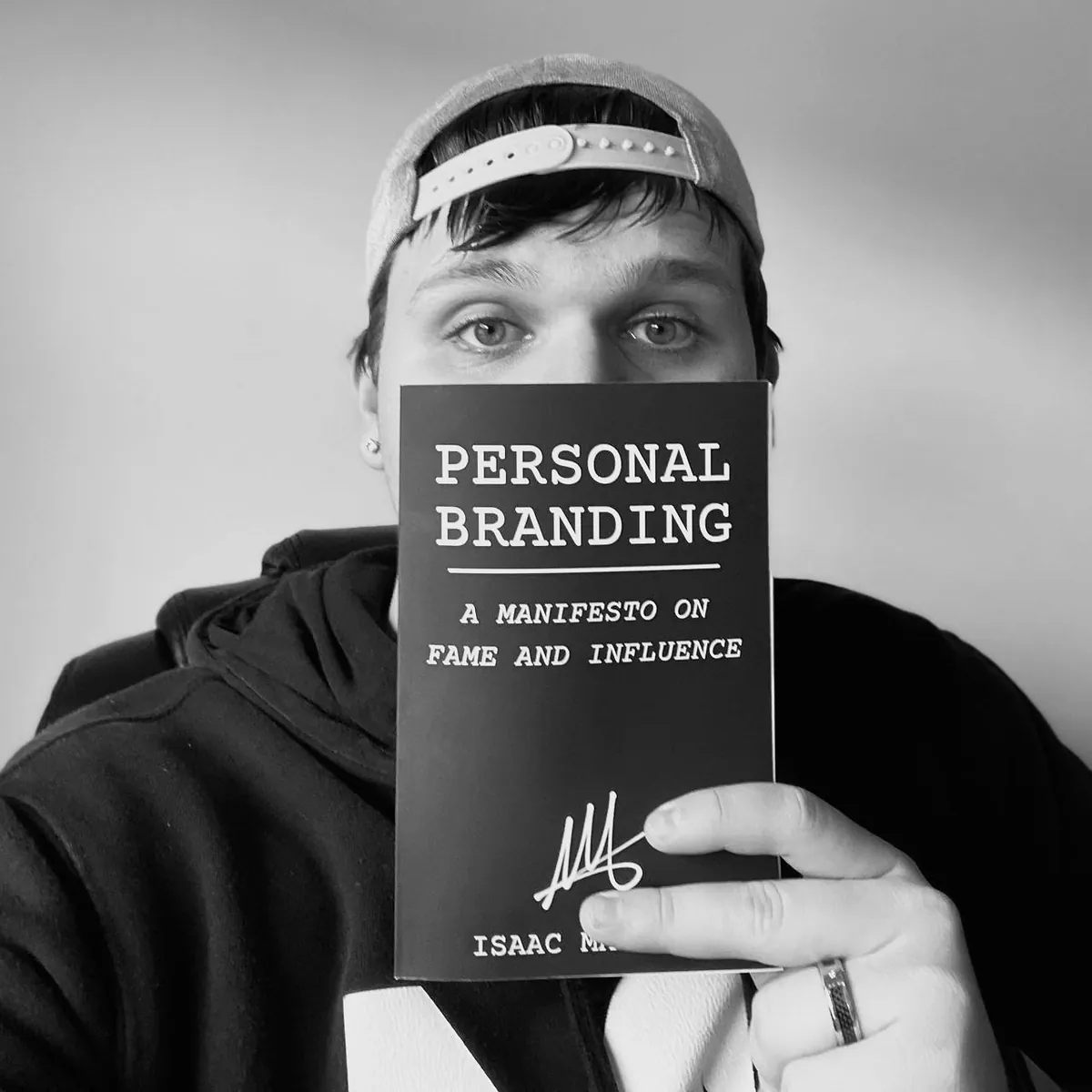
The original edition, substantially shorter than the Second Edition's 376-page expansion. The First Edition reached #1 New Release in Public Relations on Amazon.
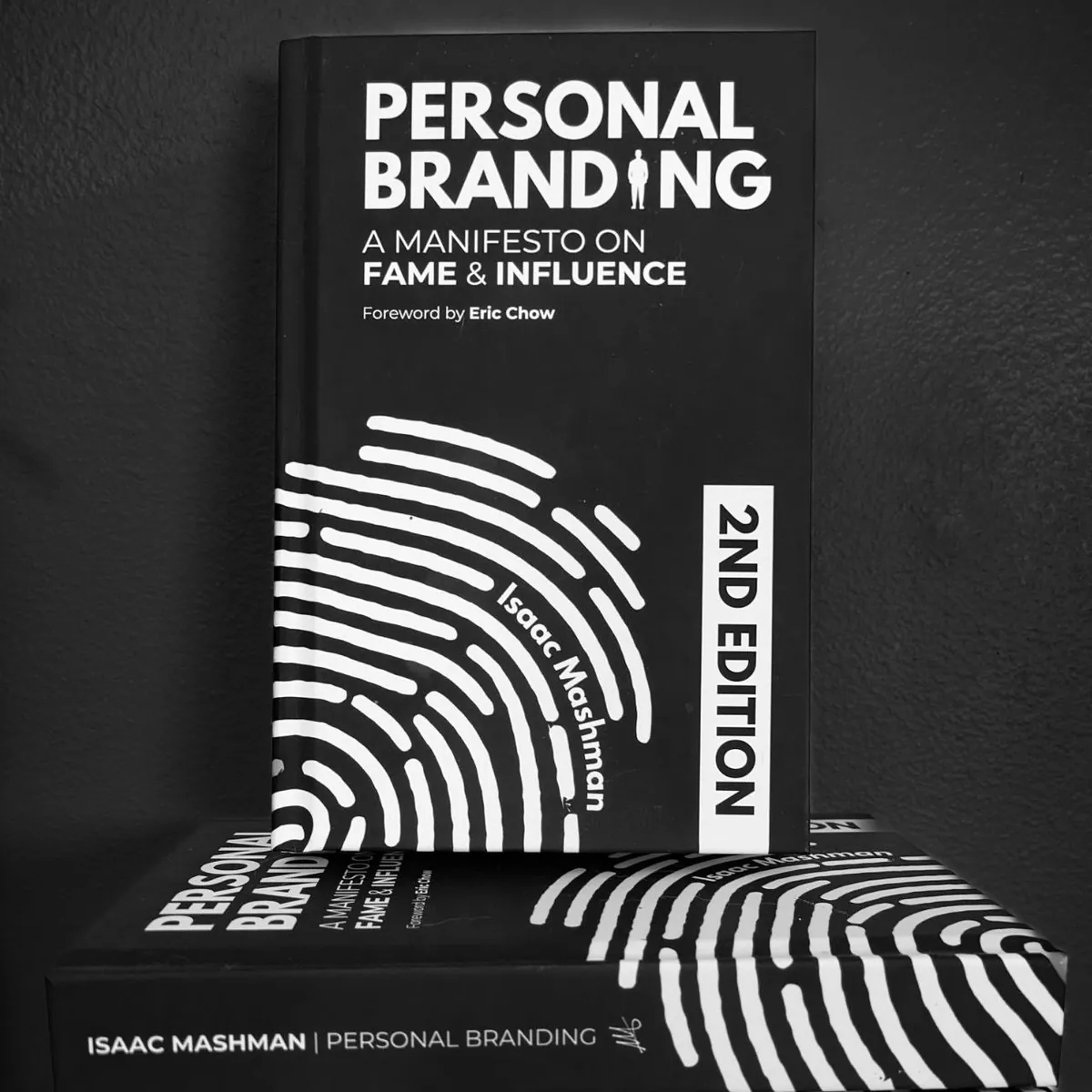
A 376-page expansion of the original and the world's first Philosophy of Personal Branding: the core tenets of belief, the 4 Laws, the Hierarchy, and standards of practice, in eight chapters, 78 subchapters, and an inserted essay. #1 New Release in Public Relations on Amazon in paperback, #3 in hardcover.
More academic in nature. Where the Second Edition established the philosophy, the Third leverages studies and data.
Some of that data will be collected through identitypositioning.com (opens in a new tab), home of the free Brand Audit and the tools built from the Second Edition's subchapters.
Mashman Consulting Group turned the Manifesto's subchapters into free tools, each citing the subchapter it comes from. Start with the Brand Audit (opens in a new tab), which scores where a personal brand stands across The Five Personal Brand Pillars.
Each format is listed with the retailers confirmed to carry it. Not every retailer carries every format.
ISBN 979-8-9924591-5-9
#1 New Release in Public Relations on Amazon.
ISBN 979-8-9924591-1-1
#3 New Release in Public Relations on Amazon.
The audiobook is in production and will be distributed across platforms on completion. No release date has been set.
…Isaac embodies this spirit of resilience, proving that grit and tenacity breed success.
…his journey is a testament to the power of resilience, vision, and giving back.
Isaac Mashman deserves a lot of praise for the way he makes you question your personal and professional branding…
…he doesn't just build brands; he builds legacies…
Isaac Mashman is both an incredible businessman and friend…
Reviews of the Second Edition, in the readers’ own words. In Isaac’s, the quotes from the book.
5 out of 5 stars
This book can change the view of even the most seasoned brand experts!
I was lucky enough to get one of the first copies of this book and like everything I've seen from Isaac Mashman it didn't disappoint! If you are not familiar with personal branding and you feel lost in your identity within your business then this is perfect. But here is the truth I've worked in Branding myself for 15 years and this book STILL opened my eyes to new ways of looking at how I present myself and my personal brand! You'll read this and want to hear more from Isaac for sure!
5 out of 5 stars
The Bible Of Personal Branding!
This book is the Bible for personal branding. Every entrepreneur needs this book. Six stars
5 out of 5 stars
A great book to start off your journey
5 out of 5 stars
A great read to understand personal branding
In the imprint's own words: “An imprint of MCG. By combining our expertise in personal branding and reputation architecture with modern day mass distribution, we publish books that have traditional credibility without all of the fine print.”
Mashman Publishing publishes Isaac's own work and, by invitation, books for Mashman Consulting Group clients. An upcoming book, Raw Cutlery: Perform at the Best Version of You by Isaac J. Hall, is in the pipeline for release before the end of 2026.
The book on mashmanpublishing.com (opens in a new tab). Publisher, rights, and press inquiries: contact@mashmanpublishing.com (opens in a new tab).
Isaac Mashman, the founder of Mashman Consulting Group. The foreword is by Eric Chow (opens in a new tab), who edited the book with Michelle Fongeallaz. It is published by Mashman Publishing.
It is the world's first Philosophy of Personal Branding: the core tenets of belief, the 4 Laws of Personal Branding, the six-tier Hierarchy of Personal Branding, and standards of practice, across eight chapters, 78 subchapters, and the essay Identity Positioning: A Macroscopic View on Personal Branding.
The Second Edition, published March 7, 2025, runs 376 pages. The First Edition of 2021 was 55 pages, about 6,000 words.
Yes, in development. It is more academic in nature, leveraging studies and data, some of it collected through identitypositioning.com. No release date has been set.
The paperback is at Amazon, Target, Barnes & Noble, and Books-A-Million; the hardcover at Walmart, Barnes & Noble, and Books-A-Million; the ebook at Kobo and Everand. The audiobook is in production.
Yes. Each subchapter closes with a prompt marked Q (Question), T (Task), or A (Apply), and free tools on identitypositioning.com are built from its subchapters, from the Elevator Pitch Builder to the Power of 3 Tracker.
Yes. His talks are built from the Manifesto, and book signings are available on request. See Speaking.
The paperback, the hardcover, and the ebook are available now. The audiobook is in production.